
On a warm afternoon in Montreal’s Mile End, I step onto Rue Bernard and find myself immersed in something quietly radical: a street reclaimed for people. To my left, a half dozen café terraces bustle with chatting patrons awaiting their food. To my right, bursts of public art and spontaneous performances animate the walkway. There are flowers, shaded seating nooks, green spaces, and more.
And all around me: no cars. Not one.
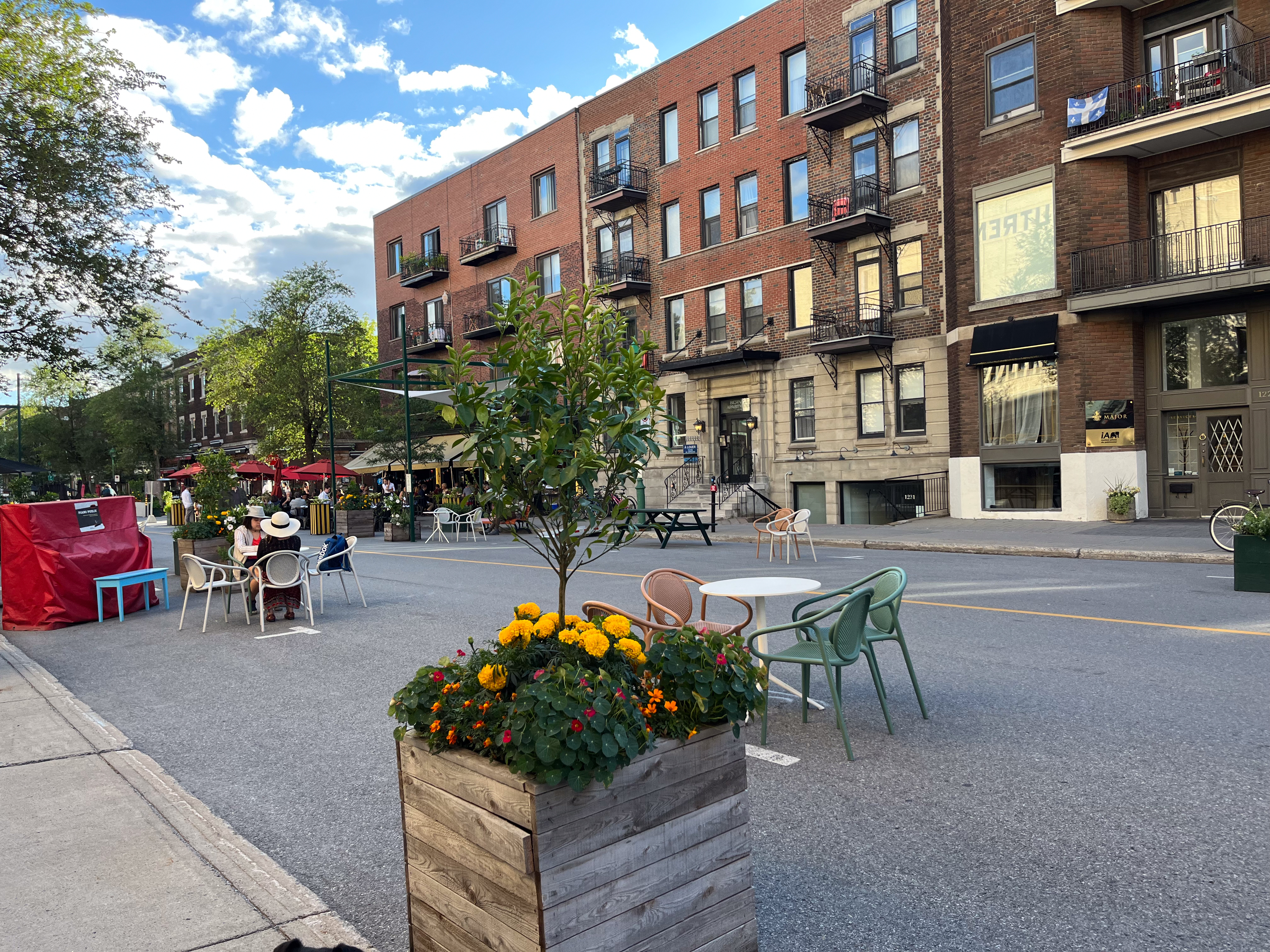 As I researched Montreal’s vibrant network of pedestrianized streets, I found not just inspiration, but a surprising legacy of people-centered streets in Burlington - one that serves as a roadmap, if you will, for the future of our shared public spaces. Because behind every pedestrian street is a simple, powerful idea: that streets can do more than move cars; they can bring people together.
Pedestrianized Streets in Montreal
This three-block long pedestrian street, Rue Bernard, is a five-minute walk away from the apartment in Mile End, Montreal, that I rented for the month of July. On my daily walks, I have space to stop, sit, and perhaps respond to an email. I can get lots of distance when my dog gets a little too excited about something we’re walking past.
If I decide I want an espresso, a snack, or gelato (I am abroad, after all), I need only sit down at one of the many restaurants and cafes spilling out onto the street and await a server. In fact, the street itself is designed to invite passers-by to casually approach whatever shop catches their eye. Commerce on these streets is easily integrated with community, space, and art.
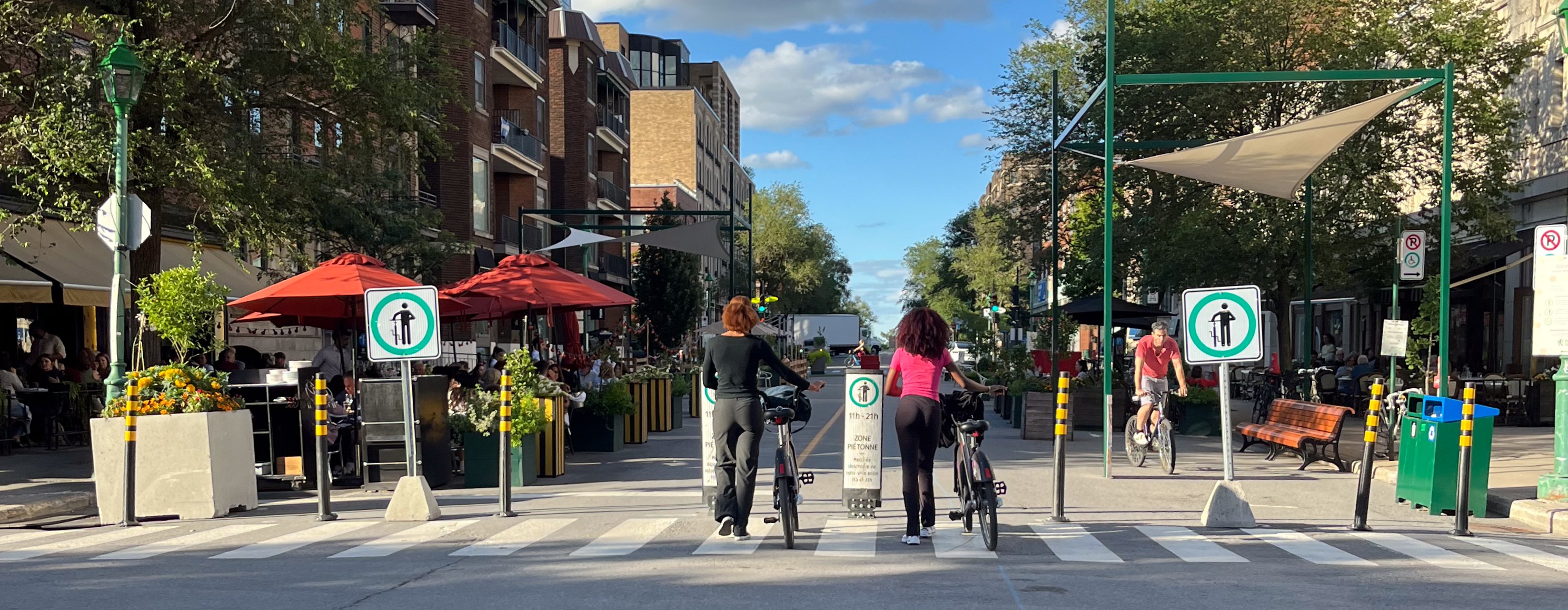
I was delighted to find this nearly four-month long street event on Rue Bernard is not the only one occurring this summer in Montreal. In fact, it is one of eight streets in Montreal pedestrianized for the season, on top of countless additional pop-up or weekend-long outdoor street festivals. So I set out to visit as many of them as I could to write about all the unique things I found and how Burlington can emulate what Montreal has clearly mastered.
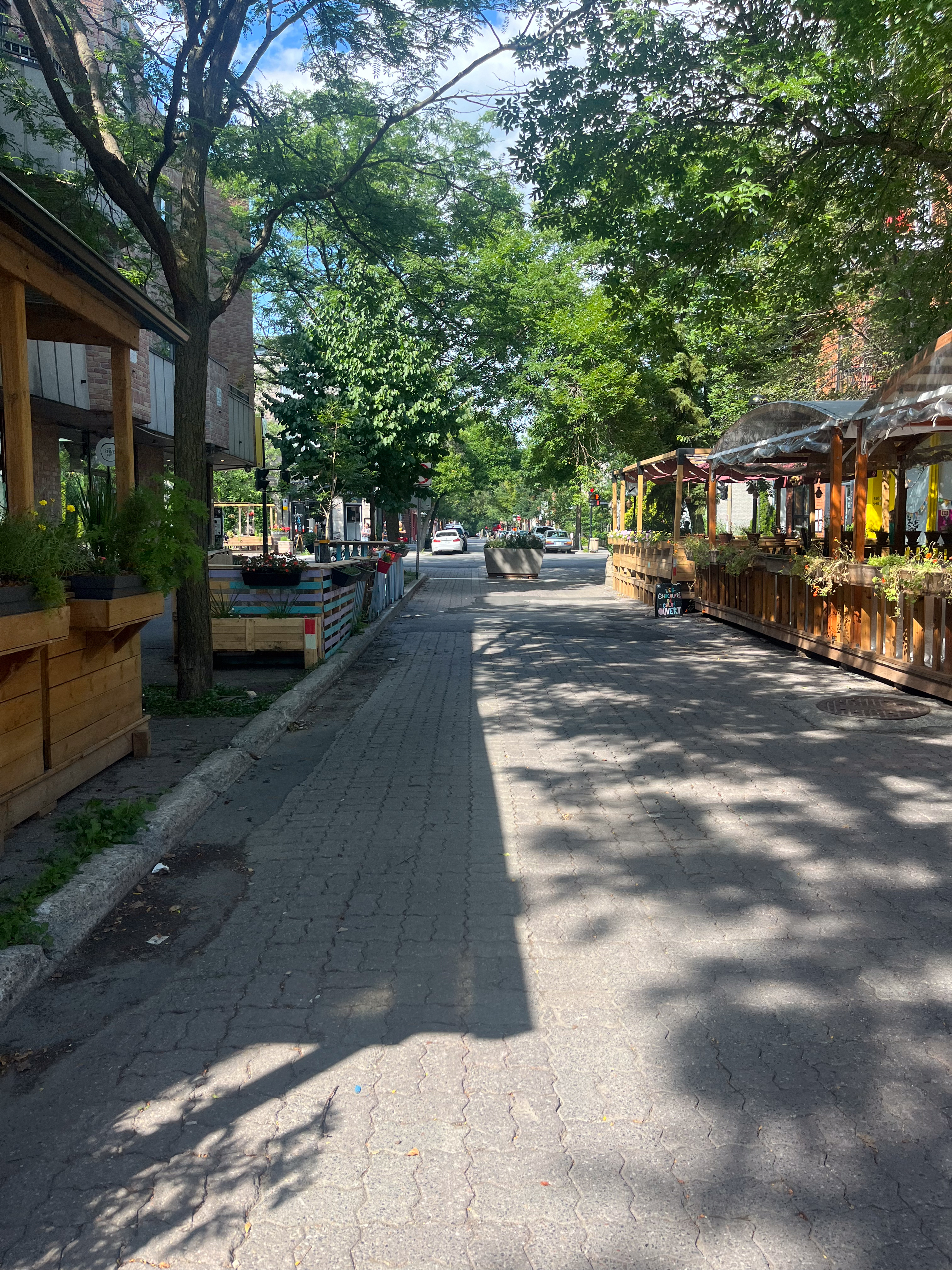 Perhaps like many Vermonters, I have often taken for granted Montreal’s commitment to creating complete streets, and used them as yet another opportunity to decry the lack of intentional public spaces in the US. So I was surprised to learn that the majority of these summer street openings only began as a response to the Covid-19 pandemic, starting with just three streets in 2020. And I was even more surprised when I read that Avenue Duluth, the original modern car-free street in Montreal - famous for being one of the first pedestrian streets in North America - cut off access to cars two years after Church Street in Burlington did.
What?!
That’s when this story took a sharp turn - from one about how we could learn from Montreal’s experience with pedestrianized streets, to one about lessons to take from Burlington’s own extensive history as a pioneer of people-forward streets. Starting with, of course, Church Street Marketplace - where we’ll start our story in 1971.
Church Street
Just like Montreal’s Avenue Duluth, the inspiration for pedestrianizing Church Street came from a visit to Northern Europe. Burlington Planning Commissioner Bill Truex enlisted the Chair of Burlington’s Street Commission to plan a one-day, experimental street fair held on four blocks of Church Street - drawing approximately 15,000 attendees.
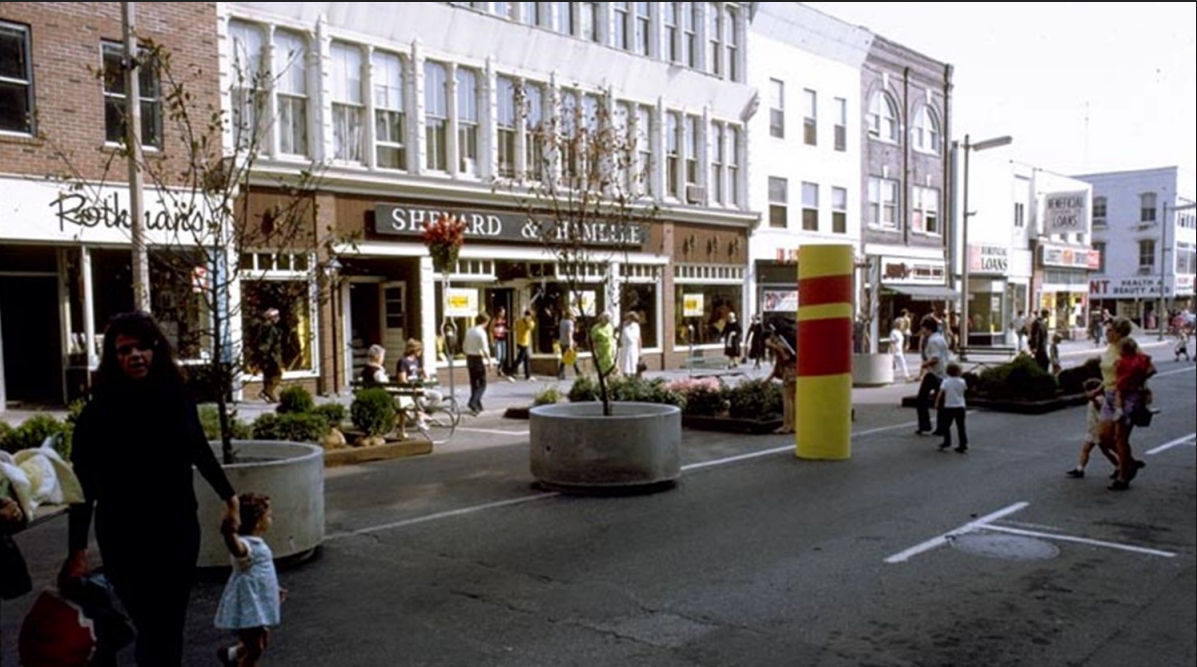
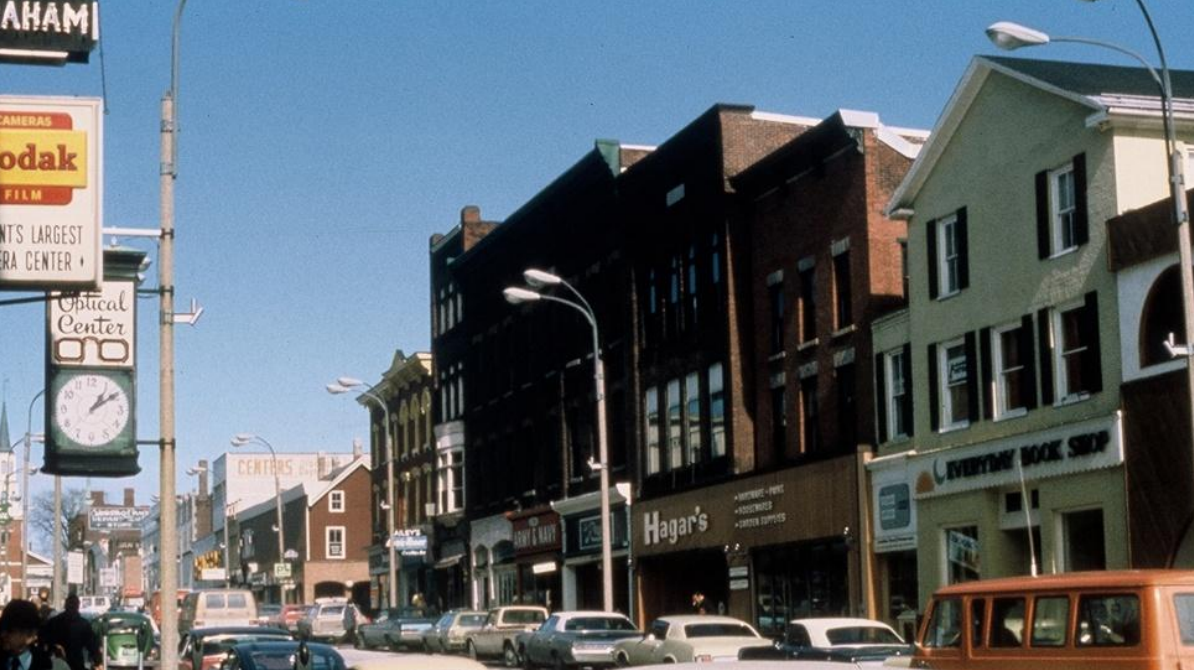
Left: Church St Demonstration Project 1972. Right: Church St pre-pedestrianization. - Bill Truex
The following year, in 1972, a week-long street fair was held along Church Street. It was a test to see if the merchants could live without parking directly in front of their stores. They opened up the street for pedestrians, creating a shared public space. Again, the event was a resounding success, with 50,000 people estimated to have visited throughout the week.
Despite this momentum, it took nearly ten more years to turn Church Street into the pedestrian street we know today. Church Street has been the center of public life and economic activity in Burlington ever since.
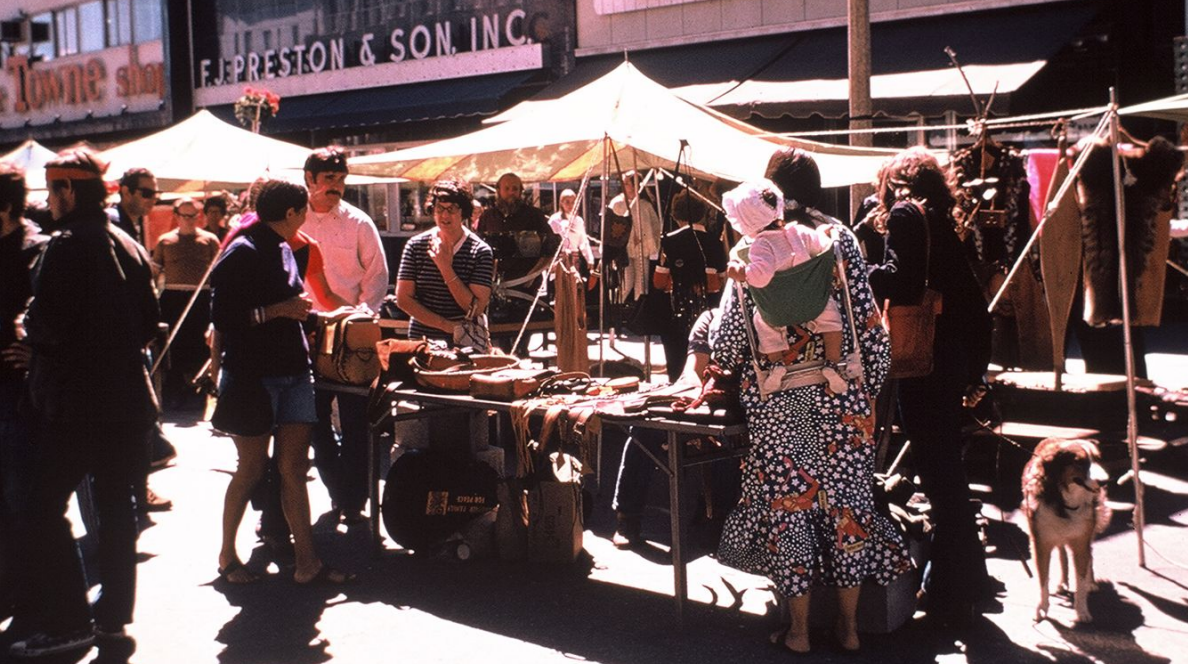
Church St Demonstration Project 1972. - Bill Truex
It all started with an idea that was tested for a day, then a week - and now 45 years later, Church Street (or Rue Canada) is the most dynamic and creative public space in the heart of the Queen City designed and created for people, not cars.
Thirty years after Church Street pedestrianized, in the early 2010s, there were nearly 30 pedestrian malls like Church Street across the U.S., and a new people-forward streets movement was getting off the ground in the U.S.: Open Streets.
Open Streets
Open Streets events occur when part of a city’s largest public space - its streets - are temporarily opened up for walking, biking, rollerblading, skateboarding, dancing and more so that people can celebrate active transportation and community connection.
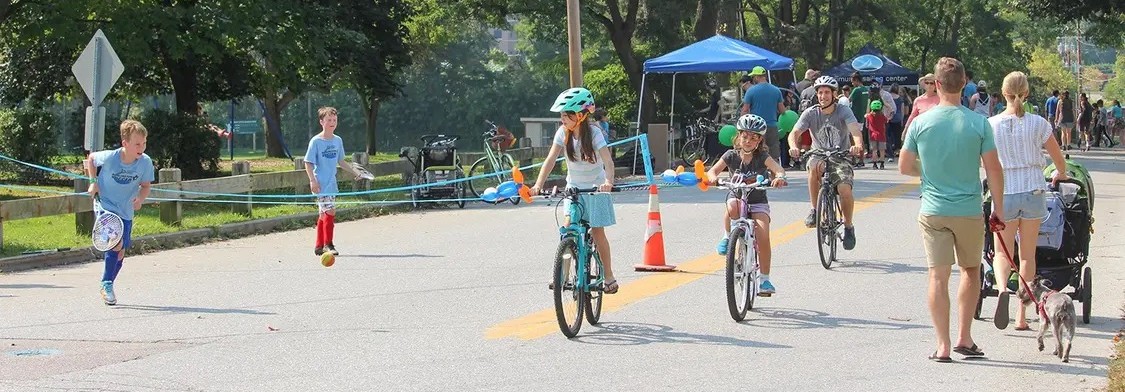
Open Streets events in the U.S. were inspired by the "ciclovia" in Bogota, Colombia, as a way to foster social interaction among people of diverse ages and backgrounds.
Open streets events are distinct from other types of street closures in that they open multiple blocks of city streets, stretching up to several miles. Separate from a block party, which typically turns a single street into a short-term community plaza, an open street event reimagines how a network of streets can become public space.
Some of the oldest examples in the US - now about 15 years old - are in Portland, OR and Minneapolis. Initiatives in these cities have grown from a single, annual event, to several events located in different neighborhoods on different weekends.
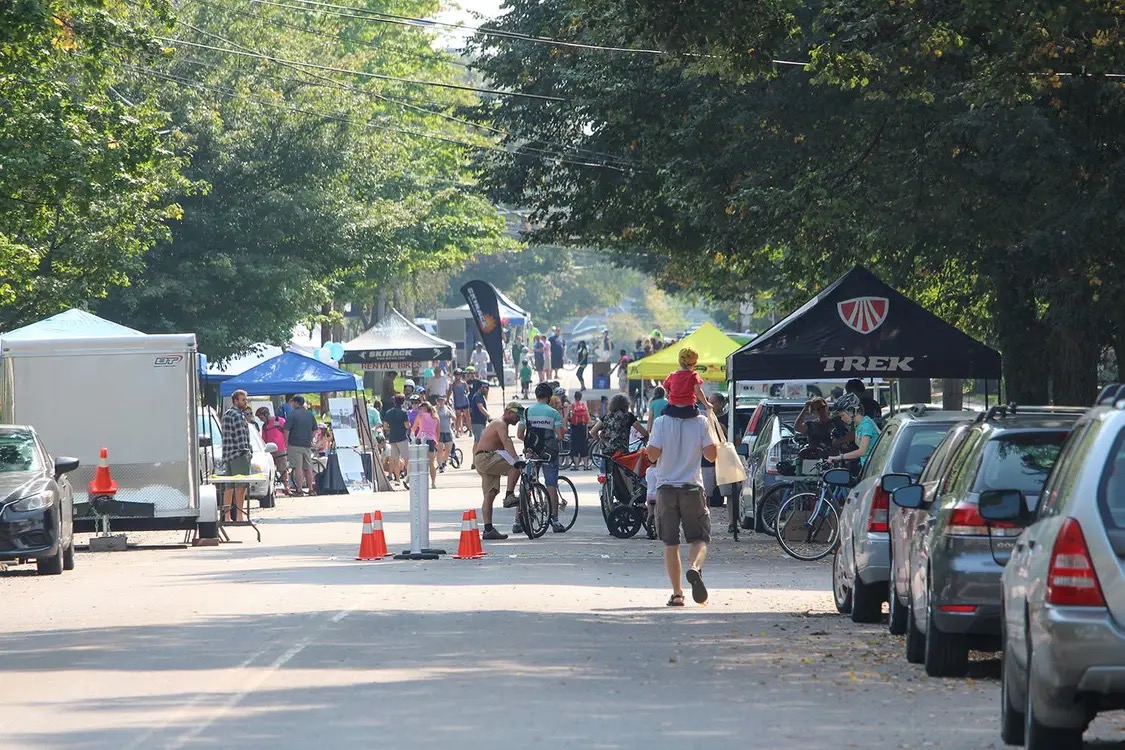
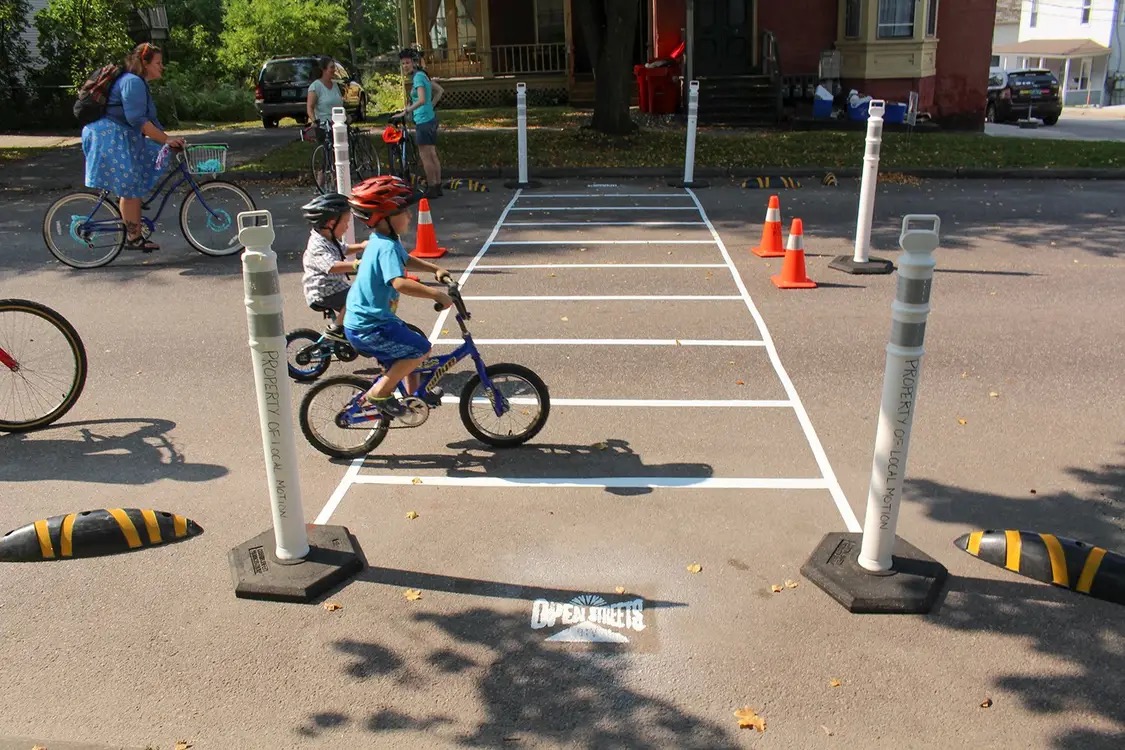
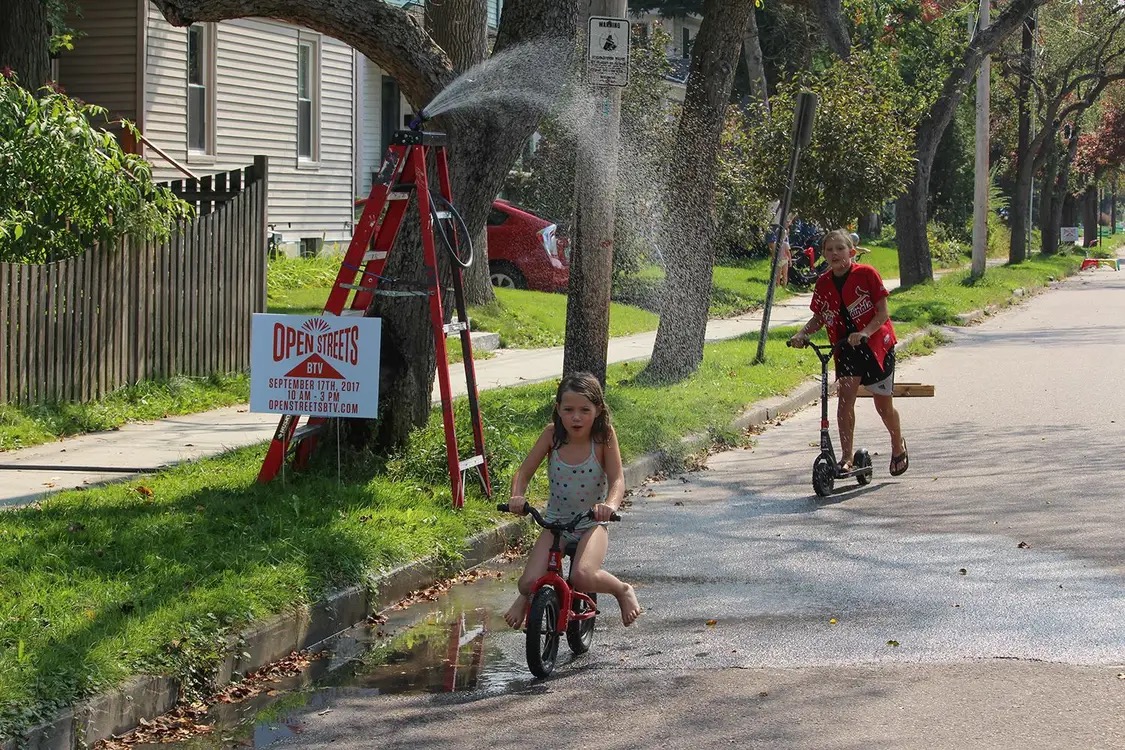
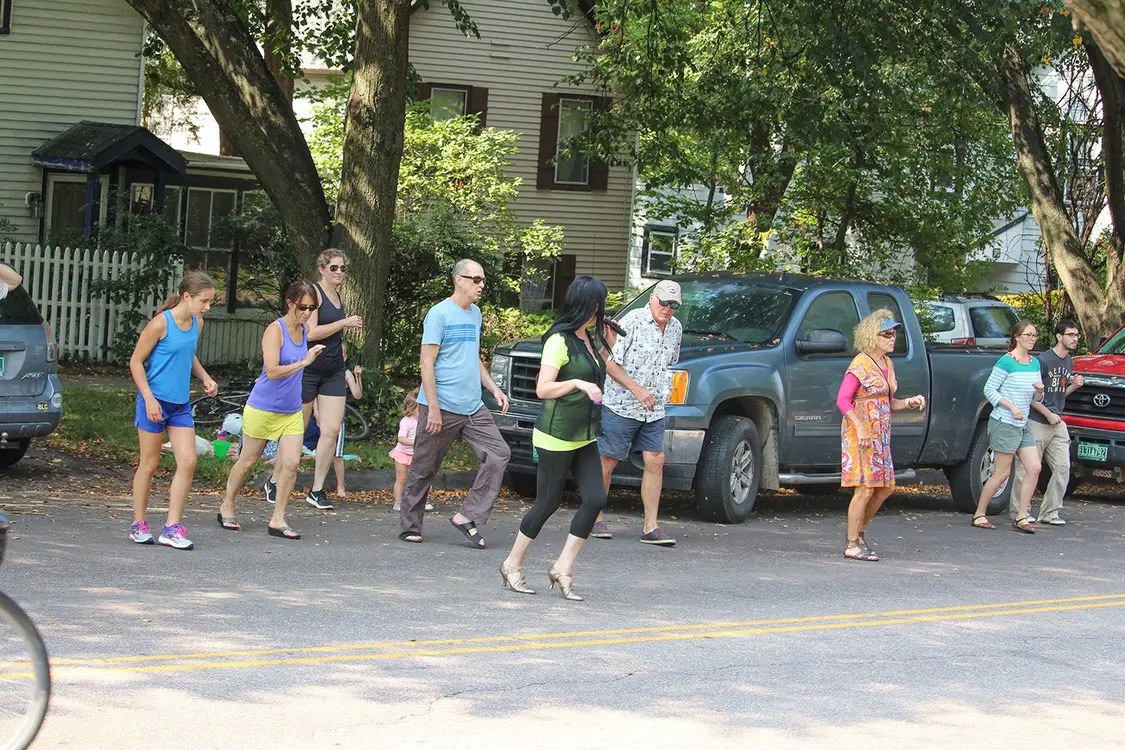
The first Open Street event took off in Burlington in 2014 - called Open Streets BTV - organized by the City of Burlington and Local Motion. It took place in the Old North End, and closed multiple streets to create three miles of pedestrian-only streets, estimated to have drawn 2,000 participants.
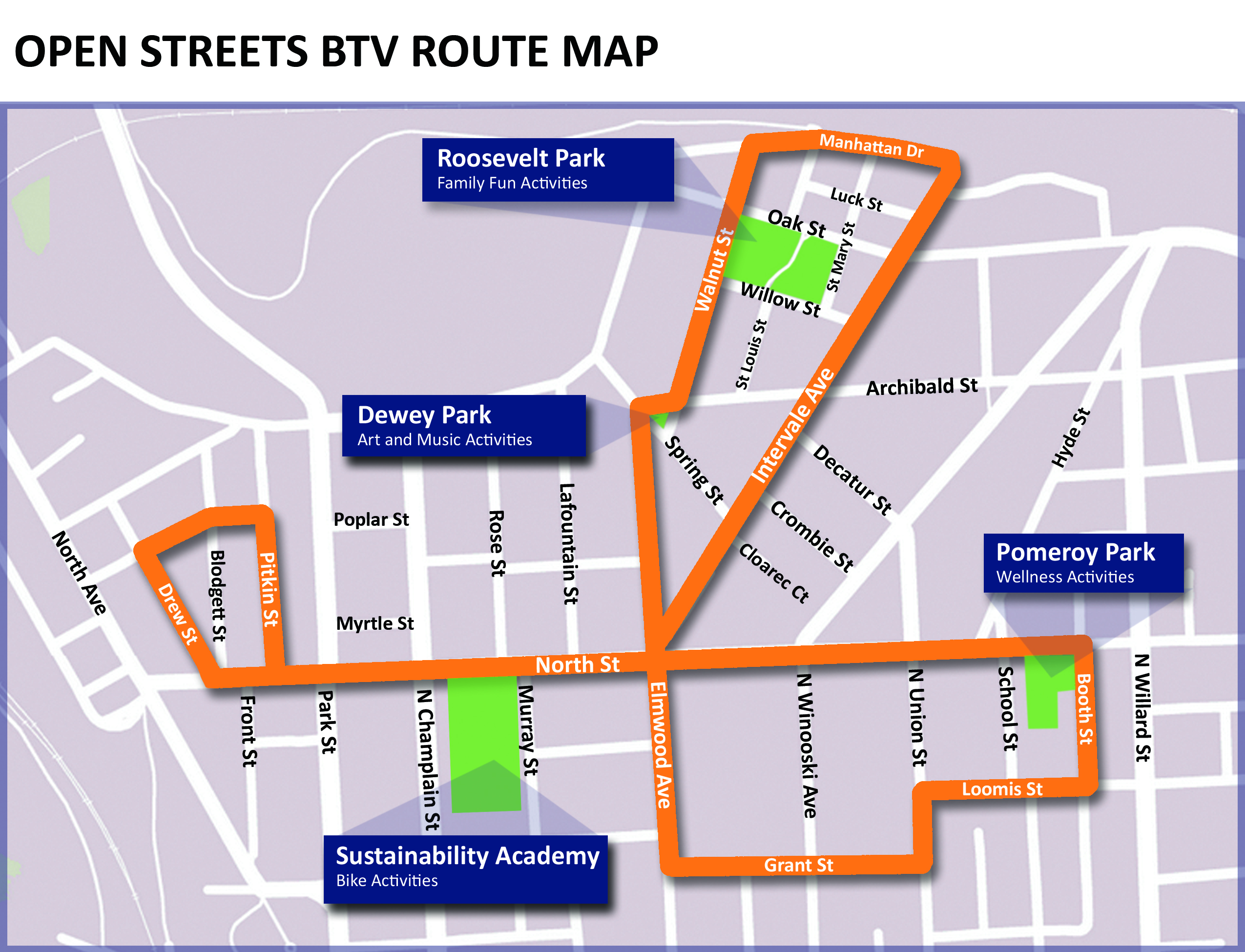
This event was hosted annually until 2018, providing experiences for, as one Local Motion promotional advertised, “FREE outdoor exercise, street art and crafts, contra dancing, local musicians, hula hooping, helmet decorating, unicycle lessons, face painting, wheelie contests, games…” as well as free bike repair, soccer games, a bike park, and so much more.
Pandemic Open Streets
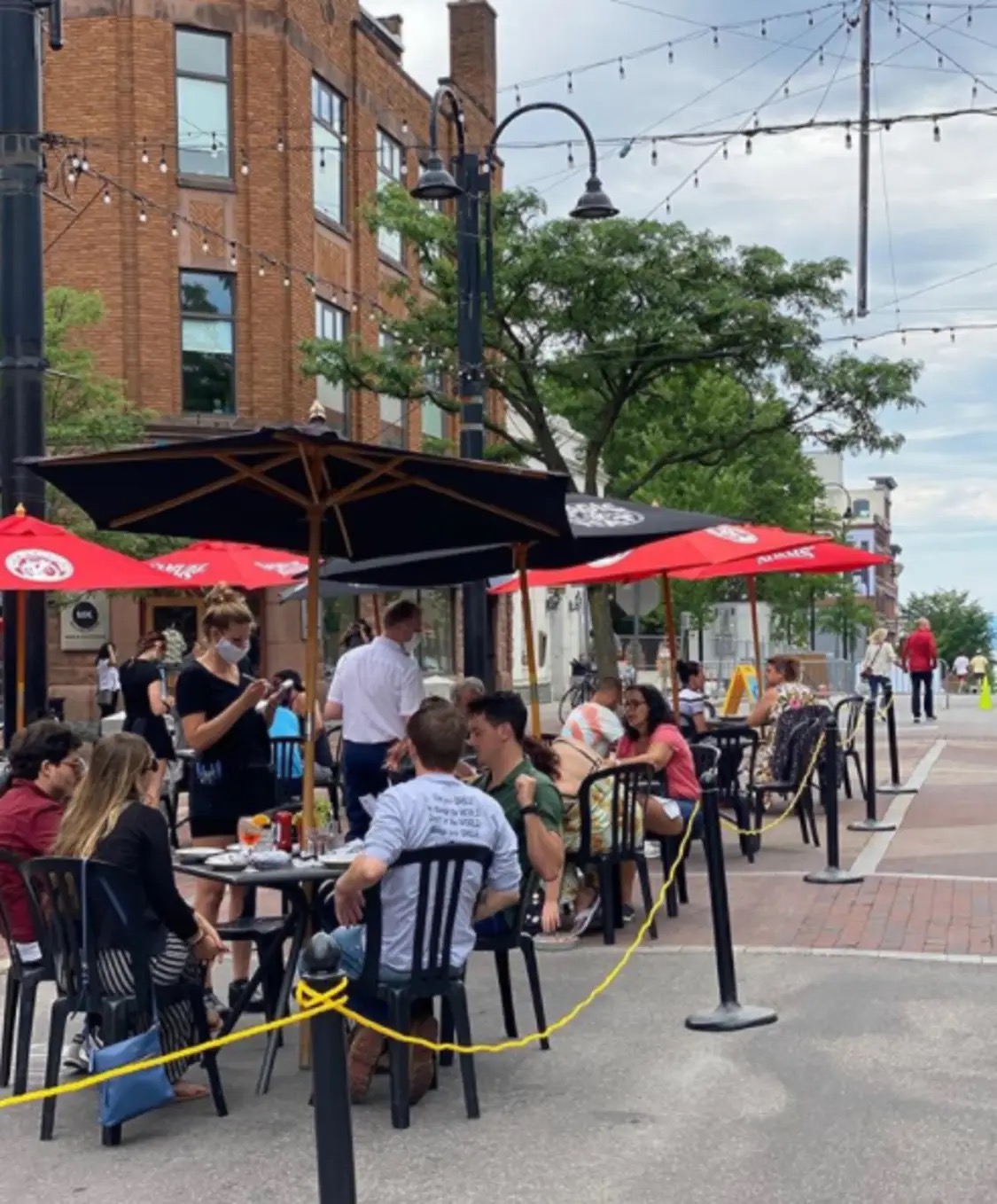 Then, along with most things about our lives, the shape of Open Streets BTV changed with the Covid-19 pandemic. The need to support our local restaurants and create space for social distancing created the type of business-forward open street that I experienced in Montreal - covered tables in the streets, shops selling clothes and wares outside, and more emphasis on pedestrians than other types of active transportation like biking, rolling, and playing.
In Burlington, this meant the closure of Cherry, College, Bank and S. Champlain Streets every Saturday, “allowing your favorite restaurants and shops to offer safe outdoor dining and shopping experiences for you and your family”. The closure was initially planned to stretch from mid-June to mid-August, but due to its success was extended to mid-September.
It wasn’t just Burlington and Montreal that experimented with this model in 2020; over 1,500 cities around the world created or expanded public spaces for active transportation and outdoor commerce to offer community connection at a safe physical distance. New York City is one of the most well documented examples, creating 67 miles of reduced and no-traffic streets in the city in the Spring of 2020.
As one article put it, “The transformation of busy streets into pedestrianized spaces allowed social distancing and reimagining of what city streets could and should be.”
So why then, has Open Streets BTV been dormant over the last five years?
Into the future
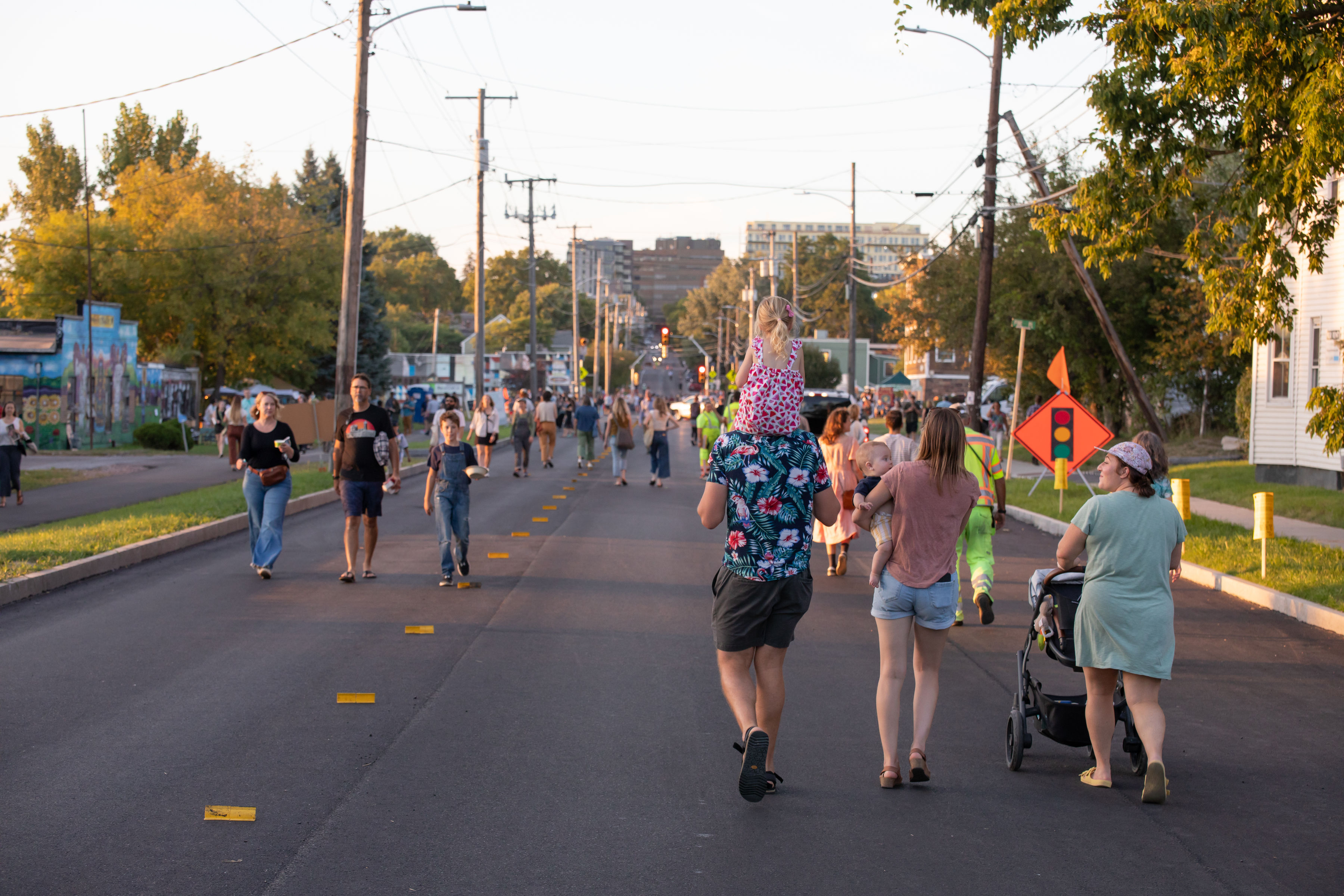
Credit: Luke Awtry Photography and SEABA
Open Streets BTV’s five-year hibernation doesn’t mean that Burlington hasn’t seen open street events in that time. Art Hop, the annual 3-day South End arts festival, typically closes a part of Pine Street to traffic after 5 pm on the first night of the event.
Community events like these are not a light lift. They may be driven by a few passionate organizers who are not paid for their time. They require many volunteers, public service support, and money. When asked on Instagram whether they’d be willing to extend the pedestrianization of Pine Street past one night, the organizer of Art Hop said they would love to but it costs them $10,000 a day, so extension would require a financial sponsor.
In Montreal, costs for open streets are shared between the neighborhood, city, and merchant associations made up of local businesses. But open streets seem to contribute more to economic development than they cost, as each year since Montreal’s open streets were established, every merchant’s association that participates has elected to support the effort again the following year.
But Burlington is not Montreal. We have a stretched city budget and our business areas are not as densely populated. That doesn’t mean that we don’t want or deserve our streets to be public spaces that foster joy, social life, and community connection. It means that we get to be creative about how we make it work for us.
July 26, 2025
To my left are two-dozen people doing a synchronized grapevine as they are led by the organizers of “Queer Country Line Dance”. To my right are children giddily being pulled along down the street on a canoe on wheels. There are artists of all kinds selling wares, sounds from live music radiating off houses on the street. At 4:30 pm, as vendors pack up, a group of hundreds of bicycle riders cruise by, waving and shouting “come join us!”.
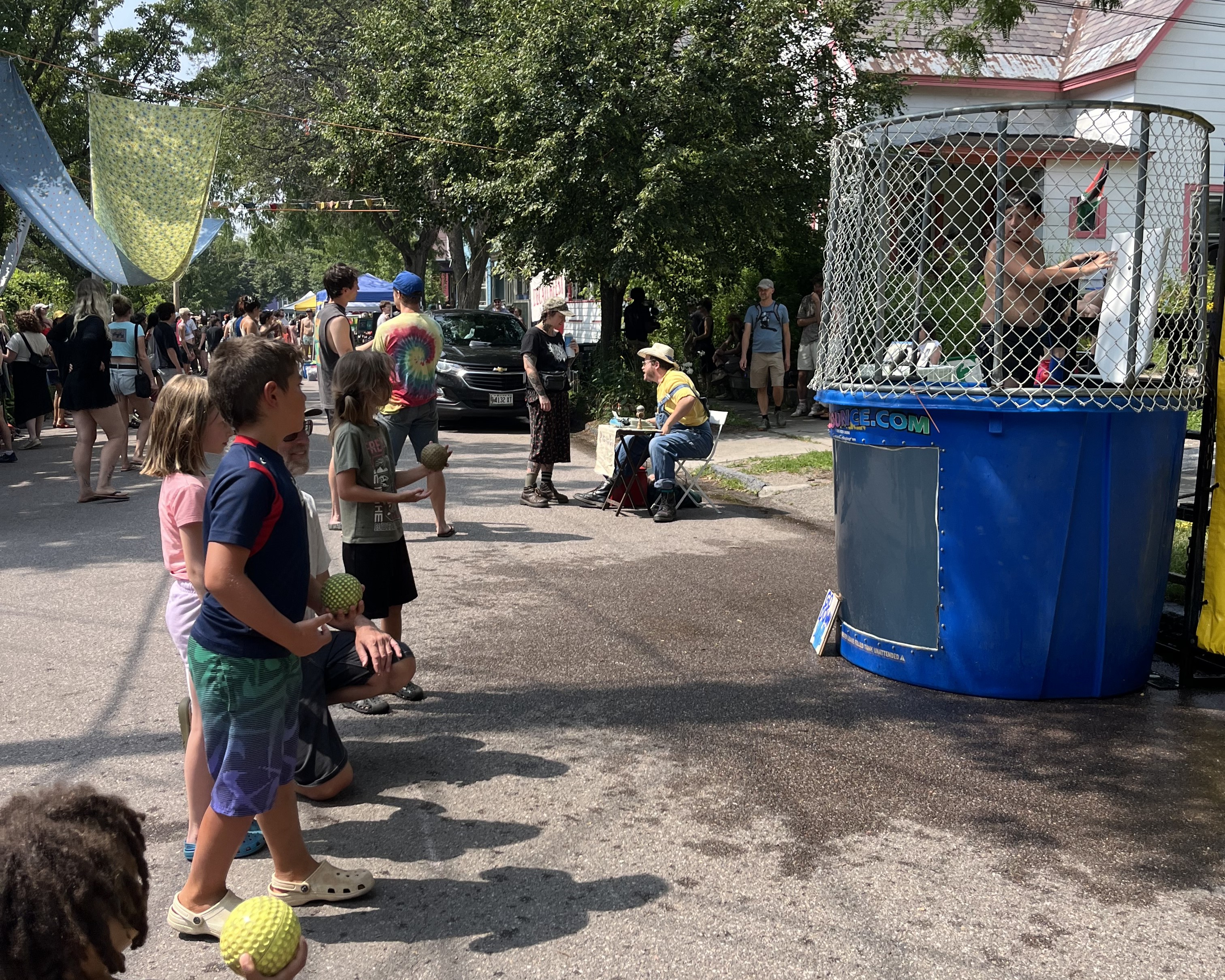
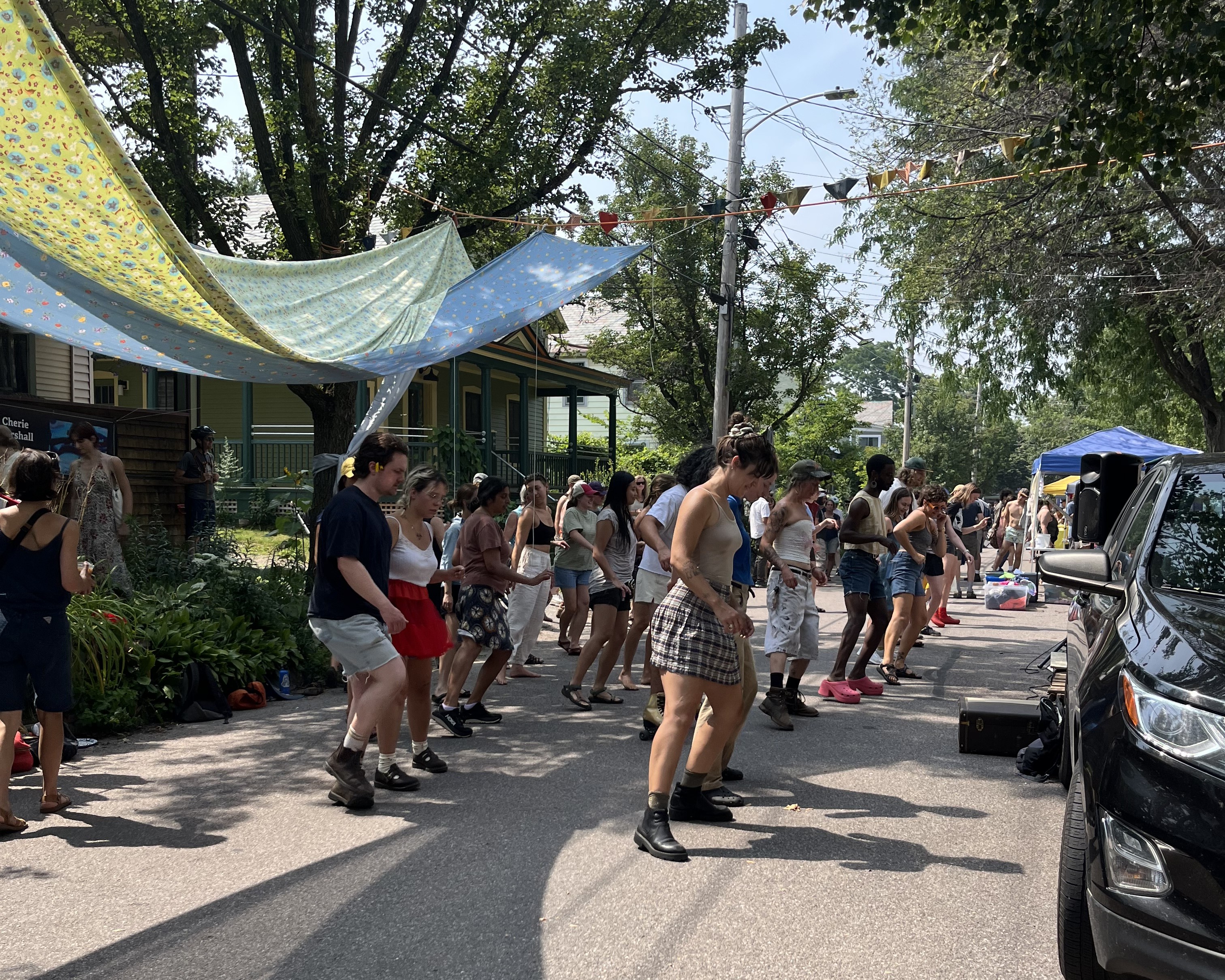
This is Decatur Street in Burlington, and to me, it captures the spirit of ciclovia perfectly. The street is opened for cross-generational connection, social activity, local commerce, and most of all, fun and joy. All around me: the sense of possibility and community.